The Truth in One Sentence
Kilimanjaro is not technically hard (anyone who can hike can walk up), but it is physically and mentally very demanding because of the extreme altitude and one brutal summit night.
What Actually Makes It Hard
- Altitude—The Real Killer
- At 5,895 m, you have 49% less oxygen than at sea level.
- Over 50% of climbers get some form of altitude sickness.
- Only ~65% of all climbers reach Uhuru Peak.
- Longer routes = dramatically higher success (8–9 days = 92–97% success).
- Summit Night—The Longest Night of Your Life
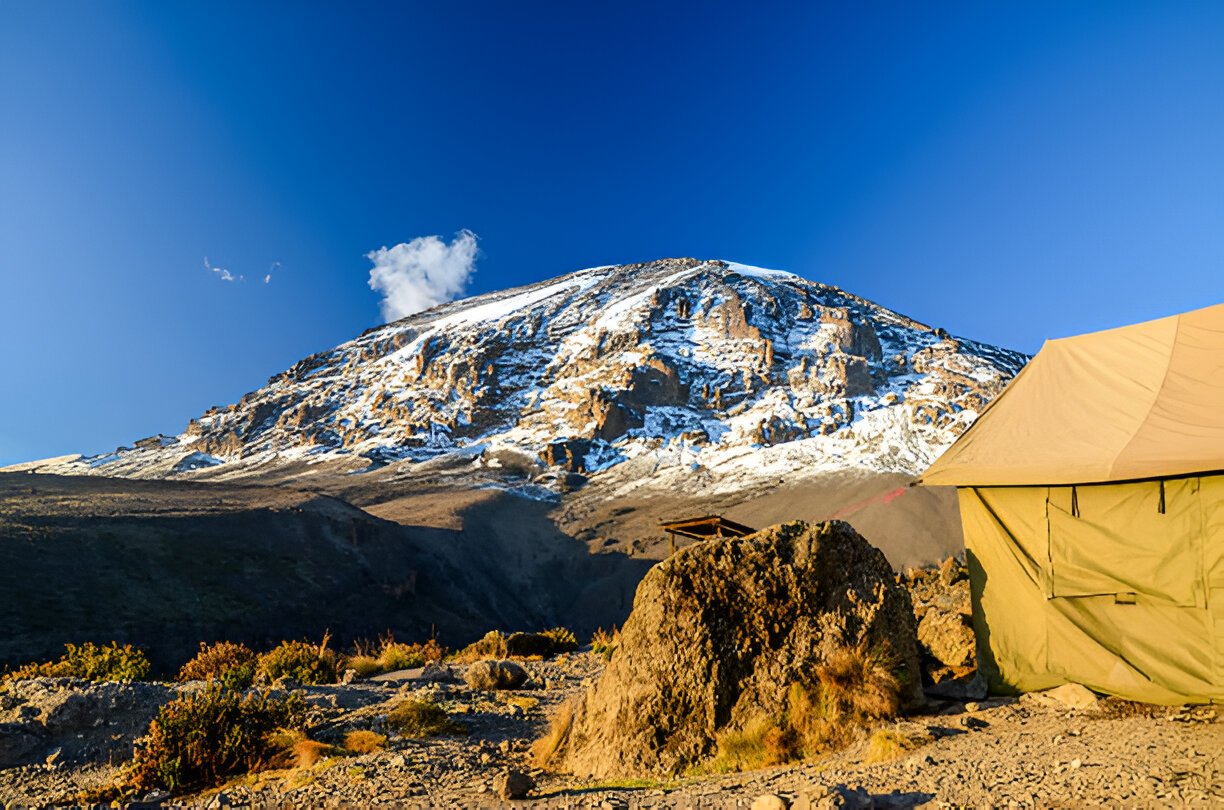
- Start at midnight, climb 1,200 vertical meters in freezing darkness, arrive at the crater rim at sunrise, and then another hour to Uhuru.
- 12–15 hours total up and down.
- Temperatures of -10°C to -20°C with wind chill.
- This is where most people discover their limits.
- Cold, Wind & Weather
- Rainforest at the bottom → arctic conditions at the top.
- You need proper layers, or you’ll suffer.
- Long Days on Trail
- 6–10 hours of walking most days with a daypack (8–12 kg).
- Legs get heavy by day 4–5.
- Mental Game
- When you’re exhausted, freezing, and feeling sick at 3 a.m., only your “why” keeps you moving.
What Does NOT Make It Hard
- No ropes, ice axes, or climbing skills required
- No rock scrambling or exposure
- Porters carry almost everything—you only carry your daypack
- Trails are well-maintained paths
Who Finds It “Easy”?
Almost nobody calls the whole climb easy, but these people suffer least:
- Hikers used to multi-day treks with a pack
- People who choose 8–9 day routes
- Those who train hills and stairs for months
- Anyone with a strong mental mindset
Who Finds It Brutal?
- People on 5–6 day routes (rapid ascent = altitude disaster)
- Those who show up unfit
- Anyone who hates cold or camping
- Over-confident gym athletes who ignore “pole pole” (slowly slowly)
How Serengeti Nexus Makes It Easier
- 8–9 day routes standard (Lemosho & Northern Circuit)
- 1 guide : 2 climbers ratio
- Twice-daily health checks with pulse oximeter
- Emergency oxygen on every climb
- Private toilet tent (yes, really)
- Hot water bottles in sleeping bags on summit night
- Fresh, high-calorie food every meal
- Guides who have summited 300–500+ times
The Bottom Line
If you can hike 6–8 hours a day for a week, stay positive when everything hurts, and pick a longer route—you will very likely summit.
95%+ of our climbers do.
Ready to turn “hard” into “I did it”?
Tell us your fitness level, and we’ll tell you exactly how hard it will feel for YOU—and which route makes it almost enjoyable.
Get Your Personal Difficulty Assessment | See Real Client Stories | Chat with a Kili Veteran
You don’t have to be superhuman. You just have to be smart. 🌄🗻