The Greatest Wildlife Show on Earth
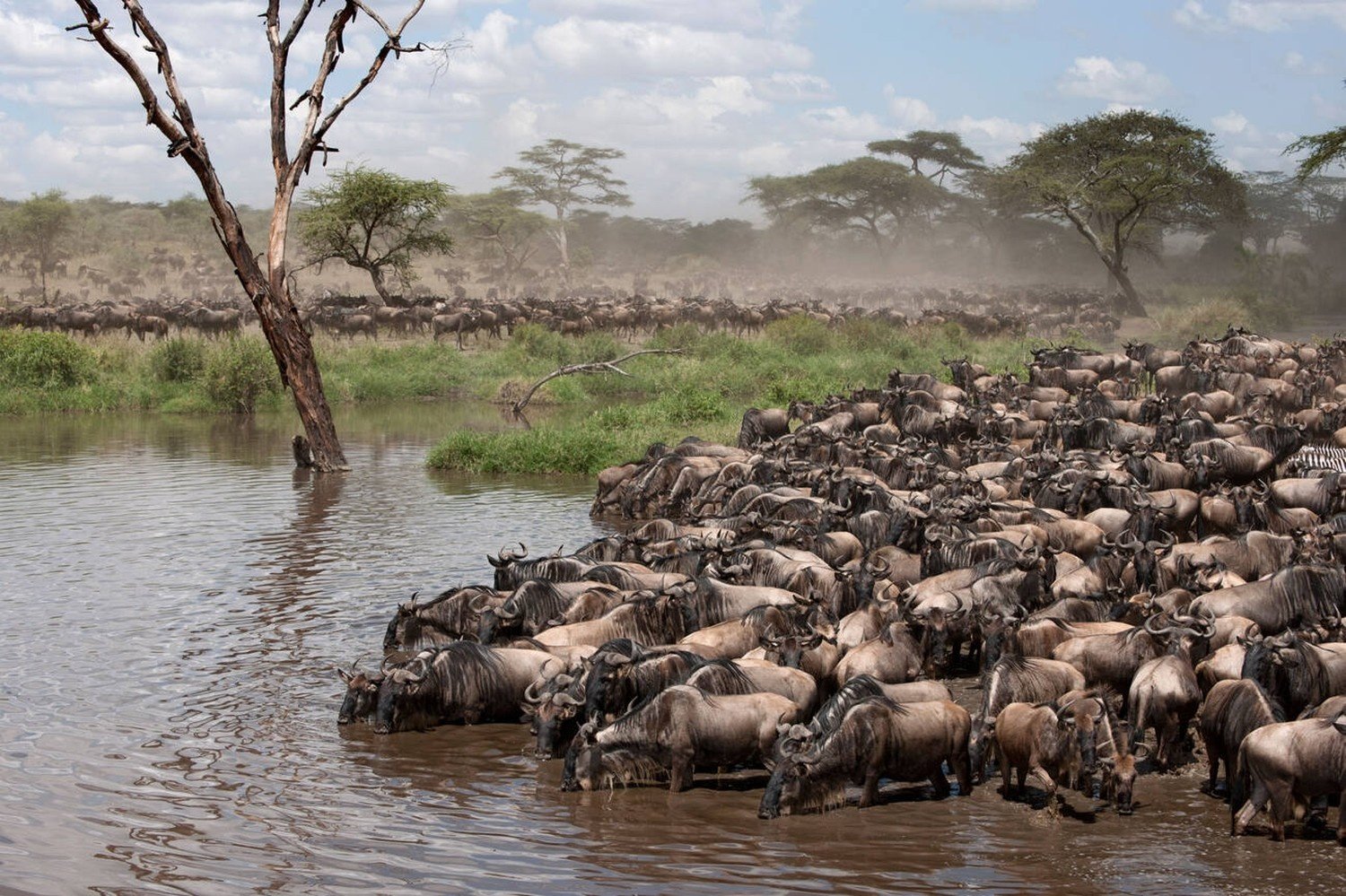
Every year, 2 million wildebeest, 200,000 zebras, and hundreds of thousands of gazelles complete a 1,000 km clockwise loop across Tanzania and Kenya. Nine months of this epic journey happen in Tanzania—making it the best country to witness the full drama.
Serengeti Nexus keeps you front-row, away from the crowds.
The Great Migration Calendar: When to Go Where
The Migration follows a fluid, rain-driven circuit. While unpredictable, here’s the 2025 guide based on historical patterns and expert forecasts:
December–March: Calving Season (Southern Serengeti/Ndutu)
- Where: Ndutu Plains (northwestern Ngorongoro Conservation Area) and southern Serengeti.
- What to See: Synchronized births of ~8,000 calves daily (January–February), overwhelming predators like lions, cheetahs, and hyenas. Tender maternal moments and newborn energy.
- Highlights: Golden grasslands, storm clouds, and intimate predator chases.
- Crowds: Less busy than peak season; ideal for photography.
April–June: Western Corridor & Grumeti River Crossings
- Where: Western Serengeti and Grumeti River.
- What to See: Herds moving northwest, facing dramatic Grumeti River crossings with Nile crocodiles. Resident leopards and lions in woodland habitats.
- Highlights: Quieter, diverse landscapes; excellent game viewing.
- Crowds: Moderate; shoulder season value.
July–October: Mara River Crossings (Northern Serengeti)
- Where: Northern Serengeti and Mara River.
- What to See: Explosive river crossings with massive crocodiles and strong currents. Herds concentrate, creating predator feasts (lions, cheetahs).
- Highlights: Iconic drama; golden-hour photography.
- Crowds: Busy; book early for mobile camps.
November: Short Rains and Southern Return
- Where: Southern Serengeti/Ndutu.
- What to See: Herds fragmenting southward as rains green the plains. Transitional sightings with resident wildlife.
- Highlights: Shoulder-season deals; dramatic storm lighting.
- Crowds: Low; great for value.
Where to Stay for the Great Migration
Serengeti Nexus’s mobile camps follow the herds for optimal viewing:
- our mobile migration camps: Relocates seasonally—Ndutu (Dec–Mar) for calving, northern Serengeti (Jun–Oct) for crossings. Intimate (12–20 guests), eco-friendly.
- our bush camp: Lightweight tents relocate for exclusive access; focuses on Grumeti and Mara.
- our central Serengeti camp: Central Serengeti base for western migration (Apr–Jun); year-round resident wildlife.
- our eastern Serengeti camp: Eastern Serengeti for cheetahs; ideal November returns.
Tip: Mobile camps (12–20 guests) avoid large-lodge crowds (100+), offering flexibility and immersion.
Avoiding the Crowds: When & How
- Shoulder Seasons: Early July/late October for northern crossings; early June for Grumeti; early March for calving (pre-Easter).
- Mobile Camps: Smaller than permanent lodges; follow herds to quieter spots.
- Expert Guides: Serengeti Nexus’ guides know secondary crossings and alternative routes for intimate views.
- Early Mornings: Golden hour (dawn) drives spot action before crowds arrive.
Tip: Book 6–12 months ahead for July–October; shoulder seasons offer 20–30% discounts.
How Long Should You Stay?
- Minimum: 4–7 nights for focused migration viewing, accounting for unpredictable movements.
- Ideal: 7–10 nights for multiple regions (e.g., Ndutu calving + northern crossings).
- Multi-Region: 2–3 nights per area (south, west, north) for diverse experiences.
- Serengeti Nexus Recommendation: 5–7 days Serengeti + 2–3 days Ngorongoro for a complete migration safari.
What to Pack for a Great Migration Safari
- Clothing: Neutral tones (khaki, olive) for blending in; layered for mornings/evenings (lightweight shirts, fleece, windbreaker).
- Photography: Telephoto lens (400–600mm), wide-angle, waterproof bags, extra batteries.
- Essentials: Binoculars, DEET repellent, SPF 50+ sunscreen, wide-brimmed hat, comfortable walking shoes.
- Other: Insect net, lightweight rain jacket (shoulder seasons).
Tip: Pack for variable weather; early mornings can be cool (10–15°C).
Best Add-On Destinations
- Ngorongoro Crater: Big Five in a volcanic caldera; 1–2 days post-southern Serengeti.
- Zanzibar: Beach relaxation and diving; 3–5 days after northern Serengeti.
- Ruaha/Tarangire: Remote wilderness with elephants and lions; for off-season extensions.
Why Book with Serengeti Nexus?
- Camps move with the herds – you’re always in the right place
- Private vehicles & expert guides who know every hidden crossing
- No middlemen – direct rates, better value
- Carbon-offset flights & community projects included
Ready to witness 2 million hooves thunder across the Mara River?
Book your 2025–2026 Great Migration safari now.
Start Planning | View 2025–2026 Itineraries | Chat with a Migration Expert
See you in the wild! 🦓💚
Frequently Asked Questions About the Great Migration
When is the best time to see the Great Migration in Tanzania?
There is no single "best" month — the migration is year-round. For the famous Mara River crossings, visit July–October. For the dramatic calving season with intense predator action, January–February in the southern Serengeti/Ndutu is unbeatable. Shoulder seasons (March and November) offer excellent sightings with far fewer vehicles.
Is the Great Migration only in Kenya, or also in Tanzania?
The Great Migration is primarily a Tanzanian event. The herds spend approximately nine months in Tanzania and only two to three months in Kenya's Masai Mara. Tanzania offers more diversity: calving plains in the south, crocodile crossings at the Grumeti River in the west, and the famous Mara River crossings in the north.
How long should I spend in the Serengeti?
We recommend a minimum of 5 nights in the Serengeti for migration visitors. Ideally 7–10 nights allows you to visit multiple regions. Pair 3 nights in the northern Serengeti (July–October crossings) with 2 nights in Seronera for resident wildlife for an outstanding experience.
Can I guarantee seeing a Mara River crossing?
No operator can guarantee a crossing — the migration follows rain and instinct, not a schedule. However, with the right timing (August–October), the right positioning (northern Serengeti, near Kogatende or Lamai Wedge), and a knowledgeable guide who monitors herd movements daily, your chances are exceptionally high. Our guides have local intelligence networks that significantly improve timing.
What is the difference between a tented camp and a lodge for migration safaris?
Mobile tented camps follow the migration, relocating seasonally to stay close to herd movements. They typically host 12–20 guests and offer an authentic bush experience. Lodges are fixed locations offering more comfort but less flexibility. For migration viewing, we strongly recommend mobile or semi-permanent camps positioned in the right zone for the season.
How much does a Great Migration safari cost?
A quality 7-night Great Migration safari with Serengeti Nexus starts from around $4,500 per person for mid-range camps, and $7,500–$15,000+ for premium mobile camp experiences during peak July–October season. This includes accommodation, all meals, game drives, park fees, and airport transfers. Contact us for a personalised quote based on your dates and budget.